Monthly Archives: January 2017

Haiku to you Thursday: “Half moon waiting”

Waiting

Waiting

Reaching for the stars /

he found a half moon waiting /

at the bare limb’s edge.

Leave a comment

Filed under 2017, Haiku to You Thursday, photo by David E. Booker, poetry by author

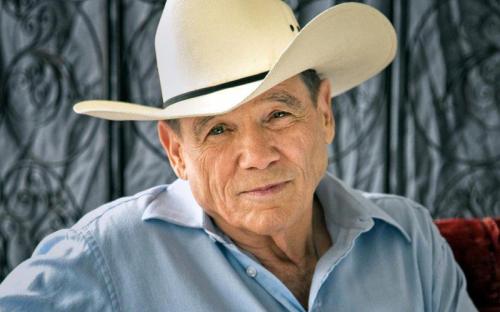
James Lee Burke – The Jealous Kind review

The heavyweight champ returns to conclude his trilogy. Book review by Liz Thomson

Source: James Lee Burke – The Jealous Kind review

In the heat of a Texas summer, Aaron Holland Broussard comes of age. It’s 1952: the two world wars still cast their long shadows and, far away, the Americans are fighting the Russians in a proxy war around the 38th Parallel.

Aaron’s a good guy, an only child in a dysfunctional household – father a drinker, probably suffering what today we’d call post-traumatic stress disorder having gone over the top in the Great War, mother who’s been through the mill with all the grim treatments thrown at depressives back then. Aaron looks after his animals and plays his old Gibson, trying all the while to beat back the fear and anxiety with which he awakens daily. On a Galveston beach following the swim of his young life, he spots Valerie Epstein, beautiful and (as it turns out) brainy, arguing with handsome low-life Grady Harrelson in his pink Cadillac convertible, and falls “joyously, sick-down-in-your-soul in love”. In the blink of an eye as Valerie throws back Grady’s graduation ring and walks away, “like Helen of Troy turning her back on Attica”, Aaron has made himself a whole legion of enemies all of whom he is determined to vanquish in defence of his beloved.

Saber, a kid from the wrong side of the tracks, is Aaron’s best friend from school, a fearless prankster for whom nothing is too much trouble. Soon both boys are embroiled not just with teenage hoodlums but with mobsters, drug dealers and corrupt cops, guns-for-hire who’ll stop at nothing to make their point.

The Jealous Kind concludes the trilogy that began with Wayfaring Stranger and House of the Rising Sun, a story which draws on Burke’s maternal family lore. The author himself was born in Houston and spent his childhood on the Gulf Coast. His daddy worked on “the pipeline” in the days when, if you had a job, you were as they say “in tall cotton” and the American dream was opportunity not fantasy. Burke was born in 1936, so in ’52 he’d have been Aaron’s age. Like the young James, who wrote his first novel in an effort to pay off his college bills, Aaron too is a would-be writer, and like him plays the guitar.

Souped-up old cars, drive-ins and juke joints are the backdrop to a story that’s set in the still-segregated south, blacks and Mexicans outcasts in a society of Mob rule, with torture and beatings, arson and shootings – rough justice casually meted out by those whose machismo has been trampled. His experience in the trenches have made Aaron’s father, an amateur historian, fiercely anti-violence and he expects his only son to be a good guy. The two attend mass together and, like his dad, Aaron holds firm to the Catholic rite and the sanctity of the confessional.

Like all Burke’s books – including the score of novels featuring New Orleans cop Dave Robicheaux – The Jealous Kind is the story of a struggle between good and evil, the rich and the righteous. Fiction, Burke believes, must have a moral line or risk being inconsequential. His characters always indicate that violence is a defeat and if it is committed it is in defence of another. Like so many of Burke’s characters, including Robicheaux, Aaron is essentially the Good Knight, a young man on a pilgrimage toward redemption.

Michael Connelly has called James Lee Burke “the heavy-weight champ” while for Stephen King he’s a “gorgeous prose stylist”. He is both of those things and more, his writing richly expressive and his ear pitch-perfect for the jive talk of the punks and pachucos and the white trash who people his novels. Passing references speak volumes: Grady’s father is reading “a collection of essays by Harry H Laughlin”, America’s leading eugenicist, while Aaron reflects: “The great gift of the government to our generation was the WPA program known simply as the bookmobile. Those of us who loved books didn’t learn to love them at school; we learned a love of literature by reading the adventures of Nancy Drew and the Hardy Boys and Richard Halliburton.”

That’s Burke speaking for sure, the old-fashioned left-wing Catholic who believes that Jesus was a radical egalitarian. Donald Trump will be grist to his literary mill.

Leave a comment

Filed under 2017, book review

Writing tip Wednesday: “New Agent to consider”

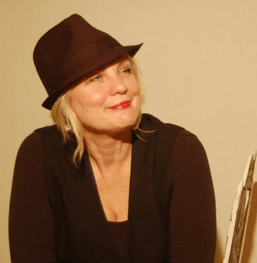
Paula Munier of Talcott Notch Literary

munierPaula Munier (Talcott Notch Literary)

Notes: “High concept only.”

How to submit: E-query editorial [at] talcottnotch.net with “Query for Paula: [title]” in the subject line.

From their query page http://www.talcottnotch.net/index.php/queries:

What should an ideal query include?

Fiction
Your fiction query should include your genre, such as mystery, science fiction or mainstream, whether the project is for adults or for children, and the length of the complete project in number of words (for example, 86,000 words), not pages. The query should give us a brief overview of the book’s plot and main characters, but does not have to include a complete synopsis. For first-time authors, we do prefer that the project be complete before you query us.

Nonfiction
Your nonfiction query should include your subject area, such as history, biography or business, the main concept of the book, the word count you project the book will be when completed, and your credentials to write the work. Unlike many first novels, many first nonfiction projects do not require that the book be finished before it can be marketed successfully, and we’ll be looking to see that the book proposal and a sample chapter is available here instead. Let us know how long you feel you will take to complete the book. Be realistic with your estimations. It doesn’t matter if you give us an estimate that sounds good if you cannot deliver the book on that date.

Things that Make a Query Stand Out
Hook us in your first paragraph. What’s the most outstanding aspect of your book? Is it your characters’ conflict? Is it your protagonist’s background? Is it the completely surprising revelation you uncovered in your research for your new health book? Don’t assume that you have your entire query to get to your point. If you don’t hook your reader with your opening, your query could get pushed aside.

Show you know your market. Nothing says you haven’t given this a thought better than saying your book is for readers 8-80. But if you say your book is YA and would appeal to readers of two specific writers (particularly if they simply aren’t the two best-known at the moment!) and can even list reasons why, then you’re getting warm.

Don’t forget your ten pages. We ask specifically for the first ten pages of the manuscript and without those, we have to make a decision based solely on the query. Perhaps your query letter isn’t your strongest point, and your voice in your manuscript is amazing? Don’t lose out on the chance to convince us! Just be sure to paste those into the body of the email rather than add them as an attachment.

Things to Avoid In a Query
Don’t stress the fact you are a new writer if you are. Stress your qualifications to write the project and your ability to promote it successfully.

Don’t suggest a book length that is simply not marketable. Research the publishers’ websites, author guidelines and new releases to know what they’re publishing right now.

Don’t quote nice things other people told you when they were turning down your query or book. It might seem like a good idea to tell us that Fabulous Editor X or Amazing Agent Y told you your writing was compelling or your characters were complex, but the next person reading this is going to wonder why that editor or agent didn’t sign the book. In fact, by giving us the quotes from rejections, you’re making the book less appealing, not more.

Avoid insisting the book is going to be a bestseller, even if you feel certain it will be! Let your story and your writing speak for itself.

Leave a comment

Filed under 2017, writing tip, Writing Tip Wednesday

BBC Radio 4 Extra – Ursula Le Guin – Earthsea

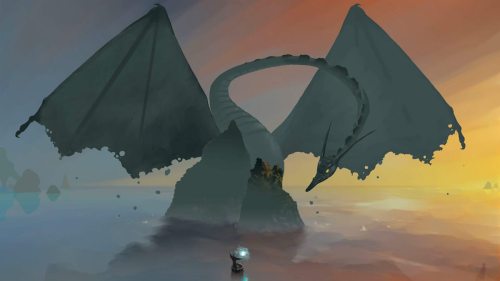
A tale of wizards, dragons and magic by Ursula Le Guin.

Source: BBC Radio 4 Extra – Ursula Le Guin – Earthsea

Leave a comment

Filed under 2017, author

cARtOONSdAY: “cASE lOGIC 23: fINISHING tOUCHES”

Sadly, he found they wouldn't even refill his doughnut bag.

Sadly, he found they wouldn’t even refill his doughnut bag.

Leave a comment

Filed under 2017, cartoon by author, CarToonsday

Monday morning writing joke: “Dueling puns, part 7: math”

Two writers who didn’t like each other met in a bar, as such writers often do. Each claimed it was his favorite bar and each claimed he had found it first. After several months of glowering at each other and bad mouthing each other, they agree to settle the matter with a duel of puns.

Since the short writer won the sixth round (by reason of plagiarism by the tall writer), the tall writer was allowed to go first for round six. A set of cards was placed on the table between them, face down. On each card was a subject. The short writer flipped the card over and the subject was math.

Props were allowed, and for each turn, each writer could make one phone call.
For round seven, the rules of round six were kept in place. For round six and five, the rules had been amended. Each writer had to say his pun and the audience would get to pick which one they preferred. The bartender, a waiter, and a waitress would be the judges as to who got the loudest groan.

After thinking a moment, the tall writer said, “All lives mater.”

This immediately drew a moan from the crowd, and not a kind one.

“Until you multiply yourselves times the speed of light squared. Then you be energy.”

The groans turned to some chuckles and a few laughs.

The short writer waited until things were quiet, then he said, “Two knights walked into a room where there was a round table. The young knight turns to the older one and asks, ‘Who built this fine table?’ The older knight replies, ‘Sir Cumference.’”

The crowd groaned, twice, and somebody laughed.

Round seven was about to go to the short writer. The short writer now had 3 wins, 2 losses, and 2 ties.” The tall writer also had 2 wins, 3 losses, and 2 ties.

Leave a comment

Filed under 2017, Monday morning writing joke

30 Essential Crime Reads Written by Women in the Last 100 Years | Literary Hub

Undisputed Queen of Crime Agatha Christie died on this day in 1976. Crime fiction is a genre that has traditionally been dominated by men—but on the other hand, Christie is the best-selling author …

Source: 30 Essential Crime Reads Written by Women in the Last 100 Years | Literary Hub

Undisputed Queen of Crime Agatha Christie died on this day in 1976. Crime fiction is a genre that has traditionally been dominated by men—but on the other hand, Christie is the best-selling author of all time, so that should tell you something. In honor of her life (and her prolific publishing career) I’ve picked out a few great crime novels written by women from each of the last ten decades. Now, of course, there are more than three crime novels from each decade that you should read (and probably more than three novels in every genre that you should read), but one has to stop somewhere, so add your own recommendations with abandon. NB: This is not a definitive list by any means; genre is necessarily a bit fluid here, privilege has gone to important, groundbreaking or otherwise historically notable works where I’ve noted them, but taste has, as ever, played a factor.

More at the link listed above.

Leave a comment

Filed under 2017, women writers

American Short(er) Fiction Contest –

The American Short(er) Fiction Contest is now open for submissions. This year we are honored to have Justin Torres as our guest judge. Submit your entry online between October 25, 2016 – February 1, 2017. The first-place winner will receive a $1,000 prize and publication in a future issue of ASF. One runner-up will receive $250 and publication, and all entries will be considered for publication.

Source: American Short(er) Fiction Contest –

The American Short(er) Fiction Contest is open for submissions. This year we are honored to have Justin Torres as our guest judge. Submit your stories of 1,000 words or fewer now!

General Guidelines
Submit your entry online between October 25, 2016 – February 1, 2017.
– The first-place winner will receive a $1,000 prize and publication in a future issue of ASF. One runner-up will receive $250 and publication, and all entries will be considered for publication.
– Please submit your $17 entry fee and your work through Submittable. We no longer accept submissions by post. International submissions in English are eligible.
– Stories must be 1,000 words or fewer. You are allowed to include up to three stories per entry. Please submit all stories in one document. Each story must begin on a new page and be clearly titled. For the title of your submission list the story titles, separated by a comma. Please DO NOT include any identifying information on the manuscript itself.
– You may submit multiple entries. We accept only previously unpublished work. We do allow simultaneous submissions, but we ask that you notify us promptly of publication elsewhere.

Conflicts of Interest
Staff and volunteers currently affiliated with American Short Fiction are ineligible for consideration or publication. Additionally, students, former students, and colleagues of the judge are not eligible to enter. We ask that previous winners wait three years after their winning entry is published before entering again.

Justin Torres is the author of the novel We the Animals, winner of an Indies Choice Book Award. His work has appeared in The New Yorker, Harper’s, Granta, and other prestigious publications. A graduate of the Iowa Writers’ Workshop, he has received numerous awards, including a Rolón Fellowship in Literature from United States Artists, a Wallace Stegner Fellowship at Stanford, and a Radcliffe Fellowship at Harvard.

On his taste in fiction, Mr. Torres has said:
“I love voice; a deeply imagined and inventive voice does more for me than a fantastic plot or vivid setting. For me, the magic of fiction lies in the words chosen and the structure of the sentences. I could write about men on Mars or about a childhood similar to my own, but my goal would be the same: get the words right, cast a spell.”

We can’t wait for your submissions to cast their spells on us. Good luck!

Leave a comment

Filed under 2017, contest

Haruki Murakami to release new novel titled ‘Killing Commendatore’ – The Mainichi

Source: Haruki Murakami to release new novel titled ‘Killing Commendatore’ – The Mainichi

TOKYO (Kyodo) — Japanese novelist Haruki Murakami will release a new novel titled “Killing Commendatore” on Feb. 24, its publisher Shinchosha Publishing Co. said Tuesday, his first multivolume novel in seven years.

The novel, comprising two books, is priced at 1,944 yen ($16.77), tax included, said Shinchosha, via which Murakami, 67, released in 2009 and 2010 a long excerpt from “Book 1” through “Book 3” of his novel “1Q84.”

Murakami, one of Japan’s best-known contemporary novelists and often touted as a candidate for the Nobel Prize in literature, released the novel “Colorless Tsukuru Tazaki and His Years of Pilgrimage” in April 2013, and a collection of short stories entitled “Onna no Inai Otokotachi” (Men Without Women) in April 2014. The two books were published by Bungeishunju Ltd.

Shinchosha had announced in late November that Murakami will release a new novel in February. At that time the publisher did not disclose details including the title.

Leave a comment

Filed under 2017, author

New words to live by: “Falsetto light”

Time, once again, for New words to live by. This is a word or phrase not currently in use in the U.S. English lexicon, but might need to be considered. Other words, such as obsurd, crumpify, subsus, flib, congressed, and others, can be found by clicking on the tags below. Today’s New Word is created by combing sound and light. Without further waiting, Falsetto light.

OLD WORDS
Falsetto, n. 1) an unnaturally or artificially high-pitched voice or register, especially in a man. 2) a person, especially a man, who sings with such a voice.

Light, n. 1) something that makes things visible or affords illumination: all colors depend on light.
2) Physics.
1. electromagnetic radiation to which the organs of sight react, ranging in wavelength from about 400 to 700 nm and propagated at a speed of 186,282 mi./sec (299,972 km/sec), considered variously as a wave, corpuscular, or quantum phenomenon.
2. a similar form of radiant energy that does not affect the retina, as ultraviolet or infrared rays.

NEW WORD
Falsetto light, n. 1) an unnaturally or artificially high-pitched light or focus shining obsessively on something trivial, unimportant, or misdirected at the expense of losing focus on more important. For example, focusing on missing car keys while the car is being stolen. 2) To loudly trumpet or lay claim to an accomplishment you had little to do with and have little right to claim.

In a sentence: By using falsetto light, the candidate was able to make the press the issue instead of the questions the press was asking that the candidate was not answering.

Leave a comment

Filed under 2017, new word, New words to live by