

Dips in the gene pool.
Not to mention it will ruin the pool for the other people, because the pool will have to close to clean up your carcass.
Dips in the gene pool.
Not to mention it will ruin the pool for the other people, because the pool will have to close to clean up your carcass.
Filed under 2015, photo by David E. Booker, Photo Finish Friday
Tiny Texas town /
clutching its two-lane necklace, /
and tattered church clothes.
Filed under 2015, Haiku to You Thursday, poetry by author

Then they all melted before they reached his lips.
Filed under 2015, cartoon by author, CarToonsday
There once was a woman from Paris /
Who fell in love with an American named Harris. /
Their love life was bilingual /
But their sports lives wouldn’t mingle: /
For each, football broke up their wedded bliss.
***
Two cows are standing next to each other in a field. Minnie says to Moo, “I was artificially inseminated this morning.”
“I don’t believe you,” says Moo.
“It’s true, no bull!” exclaims Minnie.
Filed under 2015, Monday morning writing joke, poetry by author
It is the first or second weekend of the month and time, once again, for a new word to live by. This is a word or phrase not currently in use in the U.S. English lexicon, but might need to be considered. Other words, such as obsurd, crumpify, subsus, flib, congressed, and others, can be found by clicking on the tags below. Today’s New Word is a compounding of word and a suffix two words. Without further waiting, awkwapella is the new word for this month.
Old Words
awkward, adj. 1. Missing social graces or manners. 2. Caused by a lack of social grace. [Editor’s note: There are other definitions for awkward, but these are the two best applicable to the new word.]
a cappella, adv., adj.. without instrument accompaniment.
New Word
awkwapella, adj. an unplanned and often awkward activity that suddenly casts full and unwanted attention on you.
For example, doing something embarrassing in front of others, especially your peers, co-workers, or friends that gets you attention from everybody in the immediate area. Maybe you have a noticeable laugh, which you try to hide by only laughing when everybody laughs, but then once you keep laughing after everybody else has stopped. Or maybe you start laughing at something, believing others will join you, but they never do.
Filed under 2015, new word, New words to live by
Technology has always had an effect on the form of the novel, but the story remains.
by Camilla Nelson
In This Will Destroy That, also known as Book V, Chapter 2 of Notre Dame de Paris, Victor Hugo presents his famous argument that it was the invention of the printing press that destroyed the edifice of the gothic cathedral. Stories, hopes and dreams had once been inscribed in stone and statutory, wrote Hugo. But with the arrival of new printing technologies, literature replaced architecture.
Today, “this” may well be destroying “that” again, as the Galaxy of the Internet replaces the Gutenberg Universe. If a book is becoming something that can be downloaded from the app store, texted to your mobile phone, read in 140-character installments on Twitter, or, indeed, watched on YouTube, what will that do to literature – and particularly Hugo’s favourite literary form, the novel?

At one time, the typewriter was the cutting edge technology for novel writing.
At 10,000 words, these are longer than a short story and shorter than a printed novel, which, in every other respect, they continue to resemble.
Digital editions of classic novels are also common. Some, such as the Random House edition of Anthony Burgess’s A Clockwork Orange (1962), available from the App store, are innovatively designed, bringing the novel into dialogue with an encyclopedic array of archival materials, including Burgess’ annotated manuscript, old book covers, videos and photographs.
Also in this category is Faber’s digital edition of John Buchan’s 39 Steps (2013), in which the text unfolds within a digital landscape that you can actually explore, albeit to a limited degree, by opening a newspaper, or reading a letter.
But there is a strong sense in which novels of this sort, transplanted into what are essentially gaming-style environments for which the novel form was not designed, can be experienced as deeply frustrating. This is because the novel, and novel reading, is supported by a particular kind of consciousness that Marshall McLuhan memorably called the “Gutenberg mind”.
Novels are linear and sequential, and post-print culture is interactive and multidimensional. Novels draw the mind into deeply imagined worlds, digital culture draws the mind outward, assembling its stories in the interstices of a globally networked culture.
For the novel to become digital, writers and publishers need to think about digital media as something more than just an alternative publishing vehicle for the same old thing. The fact of being digital must eventually change the shape of the novel, and transform the language.
Far from destroying literature, or the novel genre, digital experimentation can be understood as perfectly in keeping with the history of the novel form. There have been novels in letters, novels in pictures, novels in poetry, and novels which, like Robinson Crusoe (1719), so successfully claimed to be factual accounts of actual events that they were reported in the contemporary papers as a news story. It is in the nature of the novel to constantly outrun the attempt to pin it down.
So too, technology has always transformed the novel. Take Dickens, for example, whose books were shaped by the logic of the industrial printing press and the monthly and weekly serial – comprising a long series of episodes strung together with a cliffhanger to mark the end of each installment.
So what does digital media do differently? Most obviously, digital technology is multimodal. It combines text, pictures, movement and sound. But this does not pose much of a conceptual challenge for writers, thanks, perhaps, to the extensive groundwork already laid by graphic novel.
Rather, the biggest challenge that digital technology poses to the novel is the fact that digital media isn’t linear – digital technology is multidimensional, allowing stories to expand, often wildly and unpredictably, in nonlinear patterns.

From left, Tennessee Senate Majority leader Ron Ramsey, Governor Bill Haslam, House Speaker Beth Harwell.
Nashville, TN — As part of the streamlining and outsourcing of state government, Tennessee Republican Governor Bill Haslam met with the press to reveal his latest innovation to save time and money.
“From now on,” Governor Haslam said, “there will be only one mouthpiece. As we are all GOP with super-majorities in both the state senate and house, and in an effort to effectively speak with one voice, there will now only be one official mouthpiece. As governor, I will control it 60 percent of the time. State Senate Majority leader Ron Ramsey will control it 20 percent of the time and Tennessee House of Representative Speaker Beth Harwell will control it 20 percent of the time. The other 10 percent of the time it will be resting.”
When questioned about the addition adding up to 110 percent and not 100 percent, the Governor differed answering to his brother, whose company is in line to take over the numerical issues for the state, including getting more for less and pocketing the difference.
When asked about this new plan, both Senator Ramsey and Speaker Harwell were mum on the subject, as it wasn’t either of their turns to have access to the official mouthpiece.

From left, Tennessee Senate Majority leader Ron Ramsey, Governor Bill Haslam, House Speaker Beth Harwell under the proposed new system.
Filed under 2015, Photo Finish Friday, political humor
Mysteries deepened. /
New Horizons opened minds, /
unbound Pluto.
Filed under 2015, Haiku to You Thursday, poetry by author
4 Pieces of Advice for Struggling Writers
by Jenny Martin
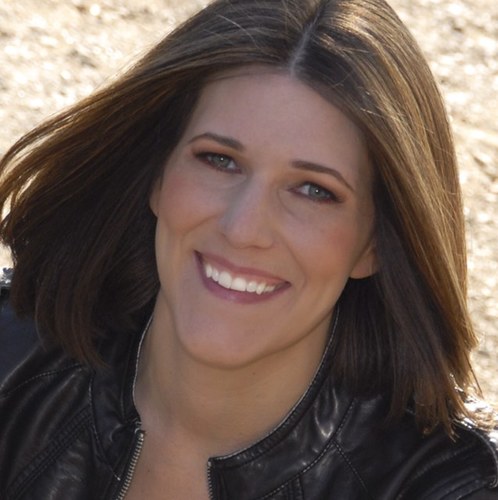
Jenny Martin
And so often, buried in these questions, there’s a palpable tremor of defeat. Of desperation and indecision and uncertainty. I hear it the writer’s voice. I read it in their words.
And it makes my heart clench. Every time.
Because I’ve been there. I’m still there, half the year. Yes, I’ve got a permanent sub-lease on that same space, a precarious little acreage between Epic Fail Valley and the Cliffs of Insanity. Maybe you’ve heard of the place, and season there, too?
If so, don’t fret. There’s hope, struggling writer. And while I may not always have the right answers to your questions, I can give some encouragement. So here it is—my advice to you:
1. If you’re struggling to succeed, you’re in good company.
Almost every single author I know has their own unique (yet somehow familiar) story of crushing heartbreak, setback, and rejection. I’m no exception. My agent was not my first agent. Tracked was not my first book. Tracked wasn’t even my first (or even second!) book on submission. What’s more, it almost didn’t sell. Then it almost didn’t make it through revisions. And to be painfully honest, every now and then, it’s still almost impossible to fight off the hydra-head monsters of fear and self-doubt. And if you’re battling those monsters, too, it just means you’re on the right path. Those tricky beasts only show up when you’re self-aware enough to grow as an artist. They smell your hunger for improvement, and they know exactly when you’re primed to level up. Yep. Naturally, that’s when they attack. So be aware, and embrace the fight. Push past it. You can do it. I’m rooting for you.
2. If you’re struggling to succeed, write the next book.
Or paint the next picture. Or sing the next song. The only way you’re ever going to move forward is to stop holding onto everything that’s rooted in yesterday’s ground. If a book isn’t working … if it’s getting rejected all over town, it might just be an eighty-thousand word clog in your creative drainpipe. It might be stoppering up the masterpiece you’re supposed to be starting right now. That book or whatever-whatchamacallit you’ve got now? It might be the project you need to set aside and revisit later, with new skills and new eyes. But of course, you’ll never know, unless you choose to start something new. Trust me. Begin again and rescue your tomorrow.
3. If you’re struggling to succeed, you need to get back up.
It’s normal to get knocked to the mat. It’s okay to get knocked to the mat. Pretty much everyone who’s ever tried anything has been knocked to the mat. More specifically, pretty much everyone who’s ever tried something great has been knocked to the mat at least a hundred times. And the people who achieve greatness? They’re the ones who kept getting back up, again and again. So if you’re there—right now, this second—give yourself a moment. Catch a breath and recover. Reassess and dust off your dreams. But then come up swinging. Scrap your way back onto your feet. Listen, you. You’re halfway to something great, just by answering the bell.
4. If you’re struggling to succeed, you’ll be prepared, when you do succeed.
All the rejections, all the tears, all the heartbreaking close calls … they will season you for the next challenge, the next goal, the next victory. Everything you’ve already faced, and will face … it all makes you tougher and fiercer and stronger. And oh, how you will cherish the victories, when they come. Each and every setback will sweeten them tenfold, while increasing your capacity for gratitude, compassion, and humility. And those victories will come. They are waiting for you, ahead.
So just keep going. I promise. You’ll see.
About Jenny Martin: author of debut novel TRACKED (May 2015, Dial/Penguin Random-House). Her book was praised by Publishers Weekly, Kirkus Reviews, and Bustle. Jenny is an author, librarian, and an experienced speaker, panelist and presenter who’s appeared at many conferences, events and festivals. She lives in the Dallas-Fort Worth area, with her husband and son, where she hoards books and writes fiction. And yes, she’s still on a quest for the perfect pancake.
Filed under 2015, writing tip, Writing Tip Wednesday
There once was a writer from France /
who worked too hard to have her chance. /
Living down by the Seine /
Her friends thought her deranged, /
when insane across the Seine she did dance.
***
A writer walks into a bar with a slab of asphalt under his arm and says, “A beer please, and one for the road.”
Filed under 2015, Monday morning writing joke, poetry by author


 Booker's Blog