
Wind slaps the darkness /
folding into noisy flaps /
pieces of the night.
Wind slaps the darkness /
folding into noisy flaps /
pieces of the night.
Filed under Haiku to You Thursday, poetry by author
Readers can’t resist turning pages when characters are facing tough choices. Use these 5 keys to weave moral dilemmas into your stories—and watch your fiction climb to new heights.
By Steven James
Key #1: Give Your Character Dueling Desires
Before our characters can face difficult moral decisions, we need to give them beliefs that matter: The assassin has his own moral code not to harm women or children, the missionary would rather die than renounce his faith, the father would sacrifice everything to pay the ransom to save his daughter.
A character without an attitude, without a spine, without convictions, is one who will be hard for readers to cheer for and easy for them to forget.
So, to create an intriguing character facing meaningful and difficult choices, give her two equally strong convictions that can be placed in opposition to each other.
For example: A woman wants (1) peace in her home and (2) openness between her and her husband. So, when she begins to suspect that he’s cheating on her, she’ll struggle with trying to decide whether or not to confront him about it. If she only wanted peace she could ignore the problem; if she only wanted openness she would bring it up regardless of the results. But her dueling desires won’t allow her such a simple solution.
That creates tension.
And tension drives a story forward.
So, find two things that your character is dedicated to and then make him choose between them. Look for ways to use his two desires to force him into doing something he doesn’t want to do.
Key #2: Put Your Character’s Convictions to the Test
We don’t usually think of it this way, but in a very real sense, to bribe someone is to pay him to go against his beliefs; to extort someone is to threaten him unless he goes against them.
For example:
Look for ways to bribe and extort your characters. Don’t be easy on them. As writers we sometimes care about our characters so much that we don’t want them to suffer. As a result we might shy away from putting them into difficult situations.
Guess what?

Spin your protagonist’s moral compass around and make him doubt his belief that pigs can’t fly.
That’s the exact opposite of what needs to happen in order for our fiction to be compelling.
What’s the worst thing you can think of happening to your character, contextually, within this story? Now, challenge yourself—try to think of something else just as bad, and force your character to decide between the two.
Plumb the depths of your character’s convictions by asking, “How far will s/he go to … ?” and “What would it take for … ?”
Key #3: Force Your Character Into a Corner
Don’t give him an easy out. Don’t give him any wiggle room. Force him to make a choice, to act. He cannot abstain. Take him through the process of dilemma, choice, action and consequence:
If there’s an easy solution there’s no true moral dilemma. Don’t make one of the choices “the lesser of two evils”; after all, if one is lesser, it makes the decision easier.
For example, say you’ve taken the suggestion in the first key above and forced your character to choose between honoring equal obligations. He could be caught between loyalty to two parties, or perhaps be torn between his family obligations and his job responsibilities. Now, raise the stakes—his marriage is at risk and so is his job, but he can’t save them both. What does he do?
The more imminent you make the choice and the higher the stakes that decision carries, the sharper the dramatic tension and the greater your readers’ emotional engagement. To achieve this, ask “What if?” and the questions that naturally follow:
Again, make your character reevaluate his beliefs, question his assumptions and justify his choices. Ask yourself: How is he going to get out of this? What will he have to give up (something precious) or take upon himself (something painful) in the process?
Explore those slippery slopes. Delve into those gray areas. Avoid questions that elicit a yes or no answer, such as: “Is killing the innocent ever justified?” Instead, frame the question in a way that forces you to take things deeper: “When is killing the innocent justified?” Rather than, “Does the end justify the means?” ask, “When does the end justify the means?”
The other two items are:
For information on these steps and the a little more about the other three, go to http://www.writersdigest.com/online-editor/5-moral-dilemmas-that-make-characters-stories-better?et_mid=694352&rid=239626420
Filed under writing tip, Writing Tip Wednesday, writing tips

At least Willard has reached some point in his writing.
Filed under cartoon by author, CarToonsday
Q: Where do zombie kids begin their education.
A.: In Head Start.
///
Q.: What’s a zombie’s goal in education?
A.: To get to the head of the class.
Filed under Monday morning writing joke

The Top 100 Star Trek Episodes Of All Time!.
Star Trek gave us six TV series, spanning over 700 episodes, because it’s such a rich universe. And a Federation starship is the perfect vehicle to tell unforgettable stories. But which Star Trek stories are the best? To find out, we painstakingly compiled the 100 greatest Trek episodes, from any of the series.
What makes for a great Star Trek episode? Obviously, the fun quotient has to be high, and there need to be awesome character moments. But I’d argue that a really notable Trek story explores some ideas, or some ethical quandaries, in a way that sticks with you after you’re done watching. If one thing has defined Trek throughout its run, it’s that.
So here’s our list of the 100 best Star Trek episodes. Please let us know which episodes we missed, or ranked incorrectly!
Warning: some spoilers below, although we try not to give away all the plot twists.
The rest of the article: http://io9.com/the-top-100-star-trek-episodes-of-all-time-1641565699?utm_campaign=socialflow_io9_facebook&utm_source=io9_facebook&utm_medium=socialflow
[Blog editor’s note: While I’m not sure I agree with the ranking in all cases here (Who would?), the fact that many episodes of the original Star Trek made it onto this list and even the number in the top twenty, shows the writing level of the original series.]

Rod Serling and The Twilight Zone
The 10 Best Episodes of 'The Twilight Zone' (as Ranked by IMDb) | Fox News Magazine.
But where is “Walking Distance”? It should be on this list.
It’s hard to choose a favorite episode of “The Twilight Zone.” Just when you think you’ve narrowed it down, you catch a classic rerun on late-night TV that makes you rethink your top choice. Heck, it’s been 55 years since the show premiered on CBS (October 2, 1959 to be exact) and we still can’t choose a favorite.
Maybe that’s because every episode was so different from the last. Sure, they all started nearly the same — with creator Rod Serling welcoming us to his otherworldly dimension — but each proved to be wonderfully weird in its own unique way. One week, we’d be treated to a macabre murder mystery, and the next, a spooky science fiction story. And more often than not, each teleplay contained an underlying moral message or a twist ending that kept our minds racing long after the episode’s end.
It’s no wonder we can’t choose a number one!
The folks over at IMDb, on the other hand, don’t seem to share our problem. They’ve handily ranked every single episode from best to worst based on the ratings of their users. And you know what? It’s kind of hard to argue with their results.
To see the list, go to: http://magazine.foxnews.com/celebrity/10-best-episodes-twilight-zone-ranked-imdb
But where is “Walking Distance”? It should be on this list.
Which one indeed
Filed under what novel are you?
It is the first weekend of the month and time again for a new word to live by. This is a word or phrase not currently in use in the U.S. English lexicon, but might need to be considered. Other words, such as obsurd, crumpify, subsus, flib, congressed, and others, can be found by clicking on the tags below. Today’s New Word is a merging of two words: Loop and Stupid. Without further chattering, Loopid is the new word for this month:
Loop, n. an object, such as a string, rope, or wire folded or turned back on itself, sometimes so that what goes out will come back on itself. Example, a feedback loop when the original signal keeps repeating itself.
Stupid, adj. dull, foolish, senseless, either a person or idea.
Loopid, adj. When you are so stupid, you don’t know how stupid you are and because of that, you continue to remain stupid, but may nonetheless think you are smart. Also known as a Loop Stupid.
n. One who is Loop Stupid.
To further explain the concept here is a short video.
Filed under new word, New words to live by
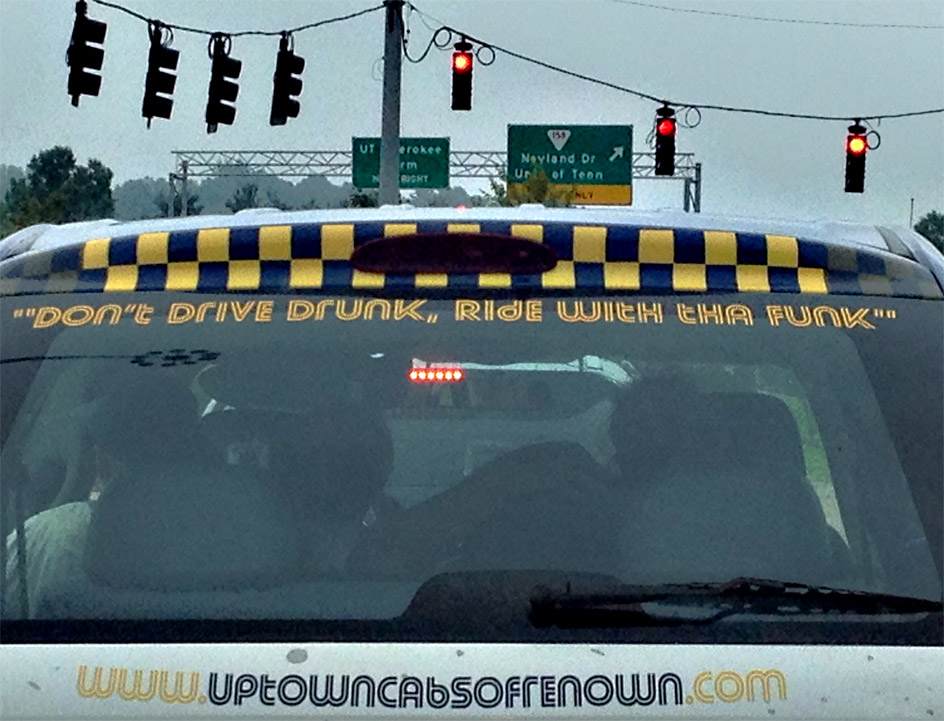
What better to do on a rainy, football-gameday weekend?
–Photo taken by Beth Booker
Filed under Photo Finish Friday
I fear most being /
a fool before time and space /
when I could have been…
Filed under Haiku to You Thursday, poetry by author


 Booker's Blog