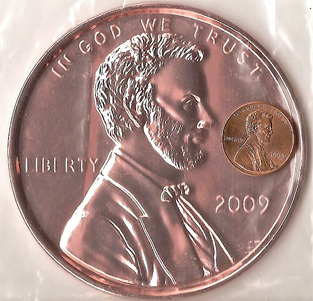
Big to little:
A.: A penny for your thoughts.
or
A.: And you thought there was no career advancement.
or
A.: I penny you.
Little to big:
A: Pass the buck.
or
A: So that’s what inflation does.
or
A.: Are you my penny, auntie?
Big to little:
A.: A penny for your thoughts.
or
A.: And you thought there was no career advancement.
or
A.: I penny you.
Little to big:
A: Pass the buck.
or
A: So that’s what inflation does.
or
A.: Are you my penny, auntie?
Filed under Photo by author, Photo Finish Friday
Dew upon the grass /
Stars upon the nighttime sky /
Gas, light, water, life.
Filed under Haiku to You Thursday, poetry by author
Writing Fiction: 5 Tips to Get More Creative
Source: http://www.writersdigest.com/writing-fiction-5-tips-to-get-more-creative?et_mid=637949&rid=239626420
1. Start with tension
Time and time again you’ll hear fiction writers and instructors tell you to start with action. This is flawed advice. Why? What good is the action if it isn’t grounded in context that’s important to the story or draws you to the main character? It’s better to start with tension, like a character falling short on getting something he wants—can’t save the life of a loved one, can’t beat a rival in a race, etc.
2. Know what your characters’ wants are
Interesting stories come from characters who want something. Romeo and Juliet want each other. Harry Potter wants to beat Draco Malfoy and Slytherin in Quidditch. Hannah Baker wants the people who led her to commit suicide know how they hurt her. Writing a fiction book requires that you have compelling characters, and characters who have strong wants and desires are the most compelling kind there are.
3. End each chapter on a cliff
OK, you don’t have to end each chapter on an actual cliff, but you do need to leave them with unanswered questions. This doesn’t mean you can’t answer questions during the book, it just means you need to create new ones as you go along. Be creative. Fiction is built on the curiosity of readers. If you don’t spark their curiosity (especially at the end of a chapter), what incentive do they have to start the next one?
4. Give your characters obstacles and 5. Understand your audience Information on these is available at: http://www.writersdigest.com/writing-fiction-5-tips-to-get-more-creative?et_mid=637949&rid=239626420
Filed under writing tip, Writing Tip Wednesday, writing tips
Q.: How many narcissists does it take to screw in a light bulb?
A.: One. He holds it up, and the world revolves around him.
Filed under Monday morning writing joke
It is the second full weekend of the month and time again for a new word to live. This is a word or phrase not currently in use in the U.S. English lexicon, but might need to be considered. Other words, such as obsurd, crumpify, subsus, flib, congressed, and others, can be found by clicking on the tags below. Today’s New Word is a merging of two words: quagmire and muffin. Without further chattering, and in honor of the “father” of the Internet, Al-Gore-rhythm is the new word for this month:
Al-Gore-rhythm =
a set of strictures by conservatives for solving a problem in a finite number of steps by blaming it all on Al Gore.
Conservatives have a problem with loyalty of today’s youth.
Al Gore speaks to the youth about an issue, such as climate change a/k/a global warming.
Al Gore is undermining respect for authority by encouraging them to ask questions.
Example, In 2009 when Glenn Beck accused Al Gore of trying to create a Hitler Youth-type movement by encouraging young kids to ask questions of their parents about global warming. In short, blame Al Gore for undermining family values by encouraging the youth to think and question.
Or put another way, Al Gore is the conservatives’ straw man and boogeyman all rolled into one.
Filed under new word, New words to live by
Some thoughts on science fiction.
Bangs, Whimpers, Arts, Culture, and Commentary
Interview by Dinesh Raghavendra, Steven A. Michalkow, C. Derick Varn, Jayaprakash Sathyamurthy. Jake Waalk, and Joseph Brenner
Jonathan Lethem is an American novelist, essayist and short story writer. His first novel, Gun, with Occasional Music, a multi-genre work that mixed elements of science fiction and detective fiction, was published in 1994. It was followed by three more science fiction novels. In 1999, Lethem published Motherless Brooklyn, a National Book Critics Circle Award-winning novel that achieved him mainstream literary success. In 2003, he published The Fortress of Solitude, which became a New York Times Best Seller. In 2005, he received a MacArthur Fellowship. His most recent book is Dissident Gardens. We decided to speak to him about New Wave science fiction, and its relationship to mainstream literary writing as well as other developments in a writer’s life.
Do movements like the new wave achieve any sort of…
View original post 2,256 more words
Filed under science fiction
Still a chance to listen, and links to additional information.
The Crime Fiction Writer's Blog
Saturday 6-14-14 at 10 a.m. PDT, join DP Lyle and Jan Burke in conversation with Robin Burcell, who is the author of award-winning crime fiction — including this year’s The Kill Order, featuring FBI Agent Sydney Fitzpatrick. Robin also spent nearly three decades working in law enforcement: she has worked as a police officer, a forensic artist, a hostage negotiator, and a detective.
LISTEN: http://www.blogtalkradio.com/suspensemagazine/2014/05/09/crime-and-science-radio-with-robin-burcell
LINKS:
Robin Burcell’s Website: http://www.robinburcell.com
HOSTAGE NEGOTIATION:
How Stuff Works: Hostage Negotiation: http://people.howstuffworks.com/hostage-negotiation.htm
PoliceOne.com: Hostage negotiations: Psychological Strategies For Resolving Crises: http://www.policeone.com/standoff/articles/1247470-Hostage-negotiations-Psychological-strategies-for-resolving-crises/
International Association of Hostage Negotiators: http://www.hostagenegotiation.com
Time: 6 Hostage Negotiation Techniques That Will Get You What You Want: http://time.com/38796/6-hostage-negotiation-techniques-that-will-get-you-what-you-want/
Hostage Negotiation: Psychological Principles and Practices: https://www.psychceu.com/miller/Miller_Hostage_Neg.pdf
Psychology Today: Active Listening Techniques of Hostage & Crisis Negotiators: http://www.psychologytoday.com/blog/beyond-words/201311/active-listening-techniques-hostage-crisis-negotiators
FORENSIC ART:
International Association for Identification: https://theiai.org
ForensicArtist.com: http://www.forensicartist.com
Crime Library: Forensic Art: http://www.crimelibrary.com/criminal_mind/forensics/art/1.html
History of Forensic Art: http://www.forensicartist.com/history/
You Tube: Forensic Art: https://www.youtube.com/watch?v=4T_2YCpZMyA
View original post 4 more words