Monthly Archives: November 2013

Knee jerk reaction to “selfie”

Miley Cyrus did all she could do to promote twerking.

Miley Cyrus did all she could do to promote twerking.

After all the work Miley Cyrus did to get the folks at the Oxford English Dictionary to select “twerk” or “twerking” as the next new word to be added, the judges at this bastion of English word deification and definition thumbed their noses at her and instead selected the warped word “selfie” to be included.

Anyway owning a smart cell(ular) (tele)phone with a front facing camera (And what self-respecting, self-involved dummy DOESN’T have one?) can engage in selfie-ism. Just pose, point, and click. Upload to your Facebook page, your blog, your Pinterest spot, your Twitter account, and anywhere else your digital self resides.

Personally, I am disappointed.

With all the work I have done to promote such new words as obsurd (obscure and absurd), face tedious (where you spend so much time on social media, commenting and in other ways inserting yourself, you become face tedious. Certainly, too many selfies can make that happen.), flib, and elastation just to name a few, why the judges lowered themselves to consider works like twerk and selfie is beyond me.

I can only surmise that their selection was some knee jerk reaction.

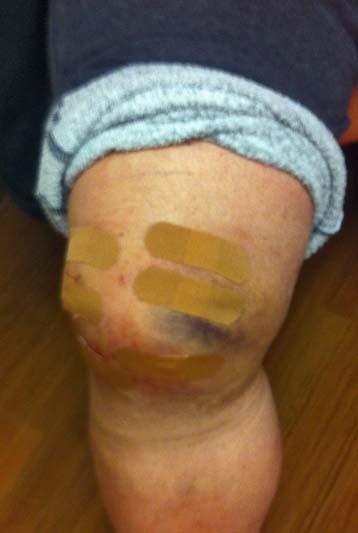
In honor of that, here is my selfie. My knee selfie. Take that, Oxford English Dictionary.

My knee selfie.

My knee selfie.

The reason I have not been blogging as much recently is because I recently had knee surgery. I had six holes cut into my knee and fifteen to twenty alien bodies removed. I assure you, they were not from outer space nor in this country illegally. To recover I am supposed to apply ice to swollen area and lay down with my knee elevated above my heart as much as possible.

It’s a little hard to blog from a supine position. Additionally (though math is not my strong suit at this time), some of the medication I am taking renders me time and space challenged. Therefore and henceforth, to wit from this knee jerking wit, you will probably be reading fewer entries from me for a while.

But look on the bright side (or brighter side as the case may be), at least I won’t be out anywhere twerking. With a knee that swollen, I am not even able to shake a leg, let alone anything else.

Happy Holidays.

4 Comments

Filed under Silly Saturday, writing humor

cARtOONSDAY: “lITERARY hEIGHTS”

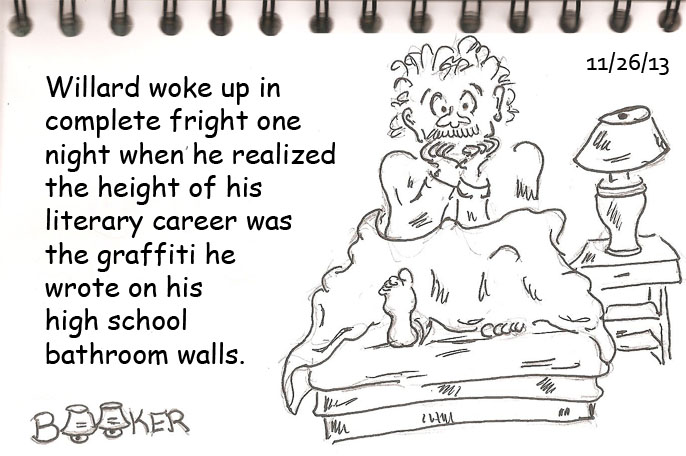
The writing is sometimes on the wall.

The writing is sometimes on the wall.

3 Comments

Filed under cartoon by author, CarToonsday

Haiku to you Thursday: “Phases”

Morning’s cold caress. /

Afternoon’s gentle embrace./

Evening’s parting kiss.

Leave a comment

Filed under Haiku to You Thursday, Photo by author

Writing tip Wednesday: “Giving the Bad Guys Their Due”

6 Ways to Write Better Bad Guys

by Laura Disilverio

http://www.writersdigest.com/online-editor/6-ways-to-write-better-bad-guys?et_mid=636328&rid=239626420

Luckily, transforming your antagonist from a one-dimensional paper doll into a force to be reckoned with—and remembered—is completely possible if you implement a few simple but powerful methods for creating antagonists and expanding their roles. You can build a worthy adversary during the outlining process or beef one up when you revise your already completed draft. It’s never too late.

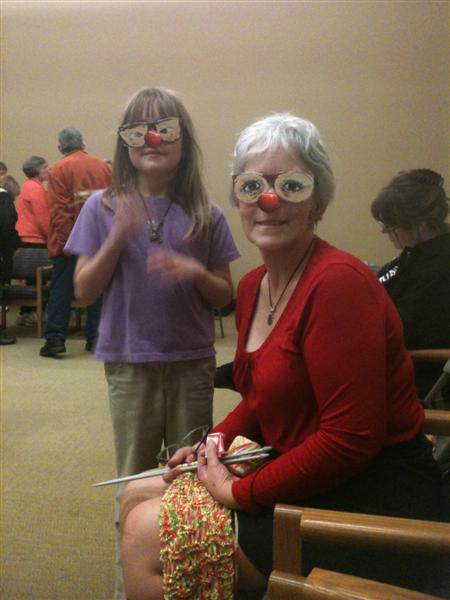
Mother and dauther in special glasses

Make your antagonists as interesting as your protagonists.

The antagonist is, quite simply, the person who acts to keep your protagonist from achieving his goals. Note the key words person and acts. I’m using person here as a catchall for a sentient being or creation of any kind that is capable of emotion and has the intellectual ability to plot against your protagonist. Thus, a personified car (as in Stephen King’s Christine) could be an effective antagonist, but an abstraction such as “society” or “Big Pharma” cannot. (More on this later.)

The antagonist must act to prevent your heroine from achieving her goals, whether that action is whispering reminders that she’s totally useless, plunging a knife into her back or anything in between. The type of action your antagonist takes will depend on his nature and the kind of story you’re writing. But your story must have an antagonist. (In some stories—Dr. Jekyll and Mr. Hyde comes to mind—the protagonist is actually his own antagonist.) Without an active antagonist, your hero could take a leisurely Sunday stroll toward his goal. Lacking the obstacles a worthy antagonist would provide, he would also lack the opportunity for growth or the necessity to change, and his character arc would flatline (as would your sales).

With the following tips in mind, reread your manuscript with an eye toward making your antagonist as compelling as your protagonist. Some effort on your part could even put your villain in the heady company of Professor Moriarty, the White Witch, Simon Legree and Nurse Ratched.

1. Remember that Antagonists are people, too.
I stop reading novels in which the antagonist is obviously nothing more than a device to move the plot in a certain direction. If I can’t empathize with the antagonist, believe in her motives or understand why she’s dishing out evil, I put the book aside. Flesh out your antagonist. Give us an origin story (how she became the way she is) or show that she regrets something and might change if given a chance.

If working with a nonhuman antagonist, personify him at least a little bit. Think of Frankenstein’s loneliness, HAL’s (the computer in 2001: A Space Odyssey) jealousy or Shere Khan’s hatred of the “man cub” (The Jungle Book). Show the antagonist doing something nice. Even villains love their mothers or cockapoos, volunteer at soup kitchens or help snow-stuck motorists push their cars out of intersections. Do this early on. Give him believable, even laudable, motives.

Inspector Javert from Victor Hugo’s Les Misérables is a strong antagonist because his obsession with finding Valjean stems from his belief that stealing is wrong. How many readers would disagree with that? Javert’s insistence that theft is always, without exception, wrong, however, turns his crusade into persecution. His inability to believe that good and evil can coexist in a single man leads him to suicide. His death is one of the story’s tragedies because he has been so thoroughly developed as a character and because we have, from the beginning, understood his motives and his flaws.

Other was include:
2. Eschew the totally evil antagonist (except, possibly, in some horror or monster stories).

3. If you’re tempted to say your antagonist is a corporation, disease or war—don’t.

4. Make your antagonist at least as smart, strong and capable as the protagonist.

5. Keep the tension strong when the antagonist is a friend, ally or loved one.

6. If your antagonist remains hidden for much of the story (as in a mystery), give him proxies or let him work behind the scenes.

For more on these other steps, go to http://www.writersdigest.com/online-editor/6-ways-to-write-better-bad-guys?et_mid=636328&rid=239626420

Leave a comment

Filed under Photo by author, Writing Tip Wednesday

Monday morning writing humor: “Prattle”

Have critics said of your work: “He never gets to his last word.”? This is called Prattlitus or Prattlitous.

Or perhaps it was phrased this way: “His conclusion is longer than his discussion.” This is called Inconclusivity.

Or, when asked to write a summary of your latest novel, has you agent said to another: “His summary is longer than the original.”? And this is called Conclusionaires Disease.

If so, you may be a prime candidate for the Authors School of Pith, or ASP for short.

As ASP you will learn the two routes to pith: No! and Hell no!

We will tone your flabby vowels, strengthen your grammatical ganglia, and brief your brevity so that you can once again find your soul of wit.

So call today for your free 30-day trial. 1-888-ASP-WIPE. Try it, risk free, and see as we teach you the pleasure of the last word, how to conclude with brevity and dignity, and most important of all, we will teach you the value of summary when you see our final bill.

Leave a comment

Filed under Monday morning writing humor, Monday morning writing joke

Photo finish Friday: “Pumpkin squash”

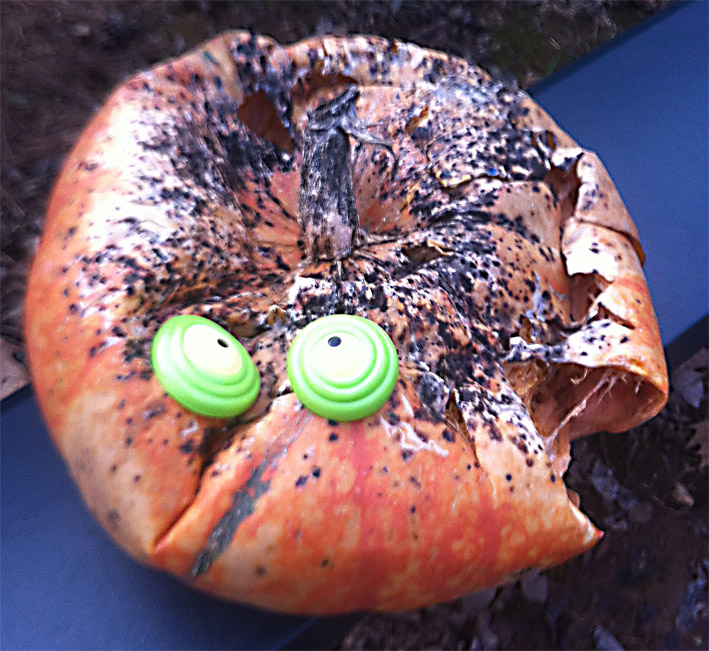
Sometimes you feel like a pumpkin; sometimes you don't.

Sometimes you feel like a pumpkin; sometimes you don’t.

Leave a comment

Filed under Photo by author, Photo Finish Friday

Haiku to you Thursday: “Generous”

Hawk perched in an oak, /

generous in its silence. /

Empty feeder swings.

Leave a comment

Filed under Haiku to You Thursday, poetry by author

cARtOONSDAY: “hOW tHINGS sTACK uP”

Sometimes the odd (and even) pages are stacked against you.

Sometimes the odd (and even) pages are stacked against you.

Leave a comment

Filed under cartoon by author, CarToonsday

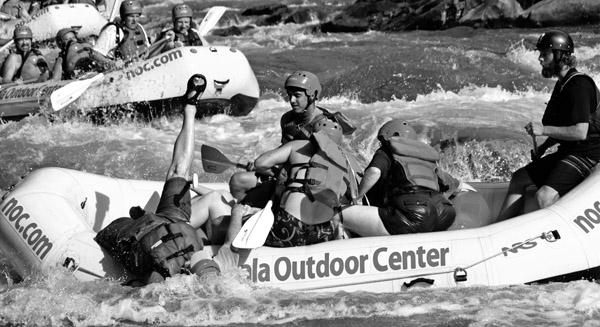
Monday morning writing humor: “The Captain said”

What the Captain said

The boat is fine, the captain said;
he said it to our face.
The boat is fine, the captain said,
the river sets the pace.

The boat is fine, the captain said,
and then he said no more.
The boat is fine, the captain said
as we sailed away from shore.

The boat is fine, the captain said,
as the river tossed us about.
The boat is fine, the captain said,
as some of us wanted out.

The boat is fine, the captain said,
steering for the roughest part.
The boat is fine, the captain said;
he’d said it from the start.

The boat is fine, the captain said
as the waves thumped into the boat
The boat is fine, the captain said
as some of us tried to float.

The boat is fine, the captain said,
Come back again next year.
The boat is fine, the captain said —
but captain, I hope you’re not here.

The first, fall flush of success.

The first, fall flush of success.

Leave a comment

Filed under Monday morning writing humor, poetry by author

Haiku to you Thursday: “State stars start”

Stars still light the night /

yet a light across the yard /

states the morning’s start.

2 Comments

Filed under Haiku to You Thursday, poetry by author