[Editor’s note: the essay below is taken from an e-mail newsletter sent out by the writer Bruce Hale. you can find his web site at: http://www.brucehalewritingtips.com/. You can also sign up for his e-newsletter at that site. Each electronic newsletter comes with other information, including a writing joke.]
5 TIPS FOR TONING SAGGY (STORY) MIDDLES
By Bruce Hale
I’ll be honest. I never thought that Pilates class at the Y would be good for anything other than kicking (and toning) my butt. Yet, Pilates, with its emphasis on tightening and strengthening the body’s core, has something to teach us writers.
Ever encountered a “saggy middle” in your story writing? Take a tip from Pilates and strengthen your story’s core.
In my experience, when the middle sags, I’ve either lost track of my main character’s goal, or I haven’t made it hard enough for him/her to achieve. If it feels like nothing’s at stake or the issue isn’t in doubt, then it’s hard to sustain that growing sense of suspense that all stories need.
How to tone up that saggy middle? Here are five suggestions:
1. Increase the tension
What keeps us reading is a sense of concern about the hero and doubt about whether he will achieve his goal. If your story’s middle section lacks excitement, look for ways to up the “uh-oh factor.”
Throw more obstacles into your hero’s path – whether internal or external. Internally, you could set two cherished goals at odds with each other (she has to choose between being in the school musical with that hot dude and playing soccer). Externally, you could hand the opposition a major victory that sets your hero back. Or you could stage a betrayal: Someone the hero (and reader) trusts suddenly turns out to be a bad guy.
2. Tighten up the action
Maybe the bones of your story are strong, but you’ve got a bit of flab on them — unnecessary scenes that bog down the action. Look closely at every scene. If you can trim or eliminate it without affecting the story’s forward momentum, maybe you didn’t need that scene in the first place.
3. Raise the stakes
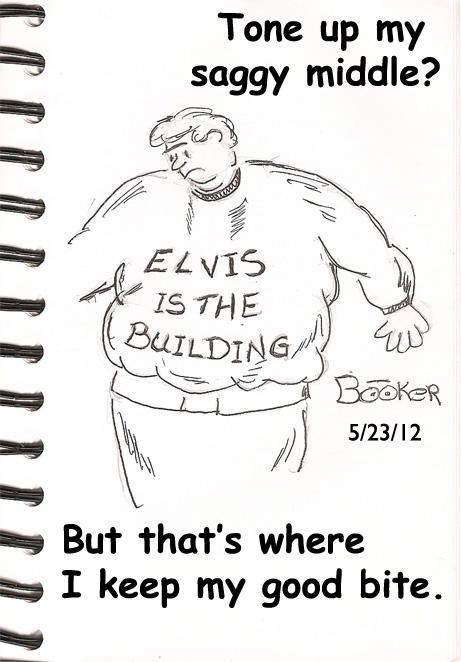
Take a good bite out of the saggy middle of your story, if you have to.
This means making the consequences of failure even weightier. If your character has been working on solving a crime, for example, you could have
the authorities accuse her, or someone close to her, of committing the crime. That way, if she doesn’t succeed, she loses more than just her good track record in solving cases. You see this a lot in detective novels – because it works.
4. Spring a revelation
This is the unexpected discovery that casts new light on everything that’s gone before it. Often a revelation occurs just before the story enters its third act, as in HOLES, where we suddenly understand the connection between the past-day and present-day tales, and we get why Stanley
Yelnats is digging in the desert.
Tricky to pull off? Absolutely. But it sure packs a punch when you can do it right.
5. Pull a reverse play
Reversals tug the rug out from under your character just when it looks like he’s making serious progress. Reversals also up the tension and hook your reader. Need an example? In THE MALTESE FALCON, just when Sam Spade thinks he’s got everything figured out, the bad guy slips him a mickey, taking Sam out of the action while his enemies run off to claim the treasured falcon.
Above all, if your story middle is sagging, go back to focus on your main character and her goal. Be sure that throughout the middle, the hero is still actively pursuing (and passionate about) his goal, and that you are continuing to throw obstacles (ever-increasing, if possible) into his path. If those two elements are in place, and you stay focused on the core of your story, chances are that your saggy middle won’t need to take a trip to Pilates class.







 Booker's Blog